SynthID alternative: forensic watermarking without Google lock-in
SynthID is only available inside Google's AI products. ForensicMark is a standalone API that works on any image from any source — and includes C2PA signing in the same request.
ForensicMark vs SynthID
| Feature | ForensicMark | SynthID |
|---|---|---|
| Works on any image source | ✓ | Google AI tools only |
| Standalone REST API | ✓ | ✗ |
| C2PA signing included | ✓ | ✗ |
| Free tier, no signup | ✓ | Limited / ✗ |
| MCP native (AI agent workflows) | ✓ | ✗ |
| Open detection endpoint | ✓ | ✗ |
What is SynthID?
SynthID is Google DeepMind's watermarking system built directly into Gemini and Imagen. When you generate an image with Google's AI tools, SynthID can embed an imperceptible signal in the output that identifies it as AI-generated content.
It's technically solid — Google has published research showing the watermark survives common image transforms. But by design, SynthID is only available through Google's own AI generation pipeline. You cannot call a SynthID API independently, apply it to images from other sources, or use it for non-Google AI outputs.
If you use Midjourney, Stable Diffusion, DALL-E, your own fine-tuned models, or need to watermark photographs and stock assets — SynthID is not an option.
Why developers switch to ForensicMark
Portability — any image, any source
ForensicMark accepts any JPEG, PNG, WebP, HEIC, or AVIF image regardless of how it was created. Watermark AI-generated content from any model, protect original photography, or tag assets before licensing. One API, universal coverage.
API-first design
A clean REST API with JSON responses means you can integrate watermarking into your pipeline in minutes. No SDKs required, no platform coupling. Works from any language or serverless function.
C2PA dual-layer protection
Unlike SynthID (watermark only), ForensicMark can simultaneously embed an invisible watermark and attach a C2PA cryptographic manifest. The neural watermark survives lossy transforms; the C2PA manifest proves origin even if the image is shared in its original form. Together they cover every attack surface.
EU AI Act compliance
Article 50 of the EU AI Act requires operators of AI systems to watermark generated content. ForensicMark gives you a compliant, auditable paper trail — regardless of which AI model you use to generate the content.
Other SynthID alternatives on the market
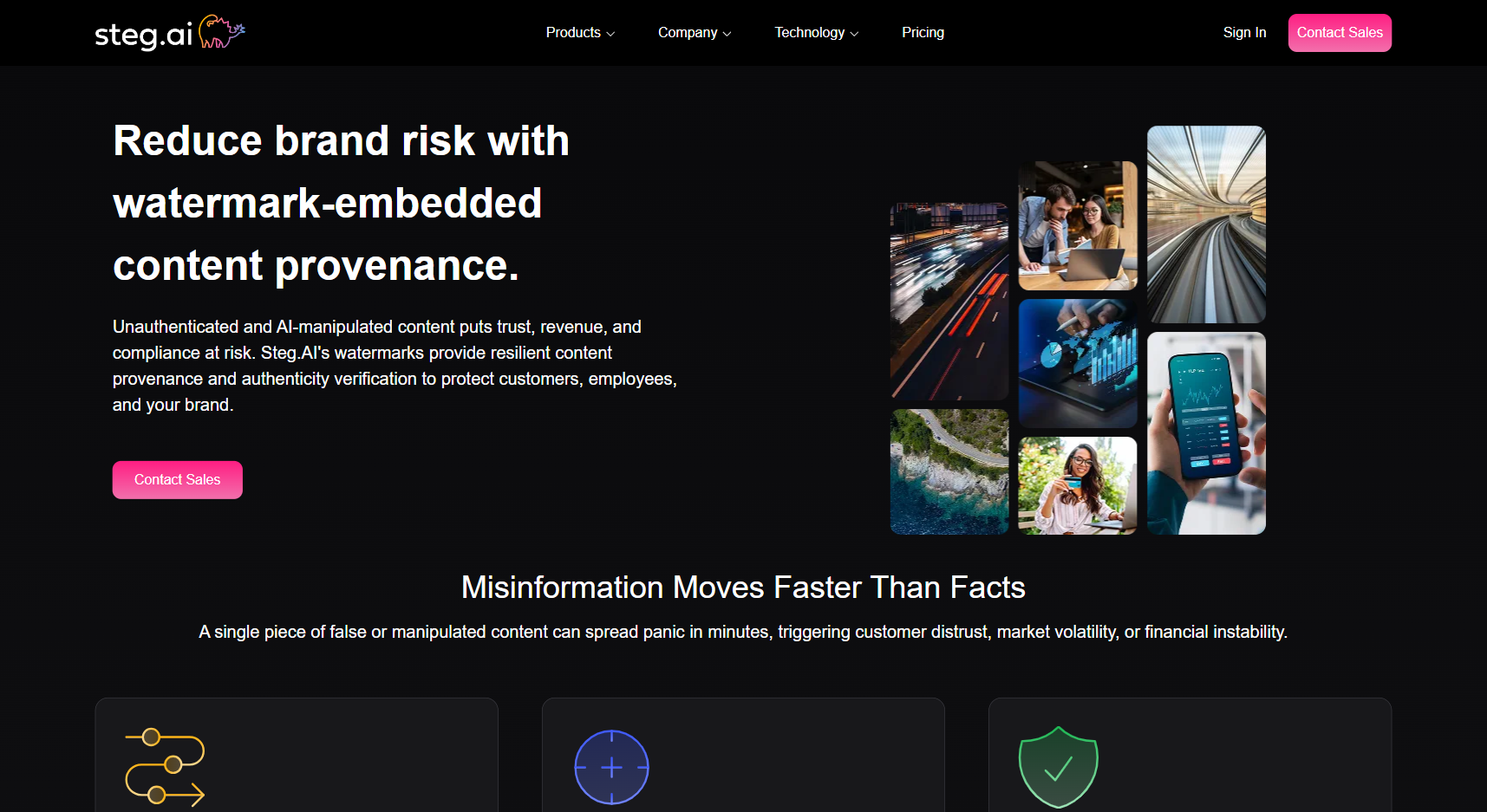
Beyond SynthID and ForensicMark, a handful of other tools tackle invisible watermarking for AI-generated content. Here's what they look like in practice — and how their positioning and pricing compare.
Steg.AI
Steg.AI offers robust invisible watermarking aimed primarily at media companies and content distributors. It supports custom payload embedding and has a focus on forensic tracking rather than AI provenance. Pricing is enterprise/quote-based with no public free tier, making it expensive to evaluate.

IMATAG
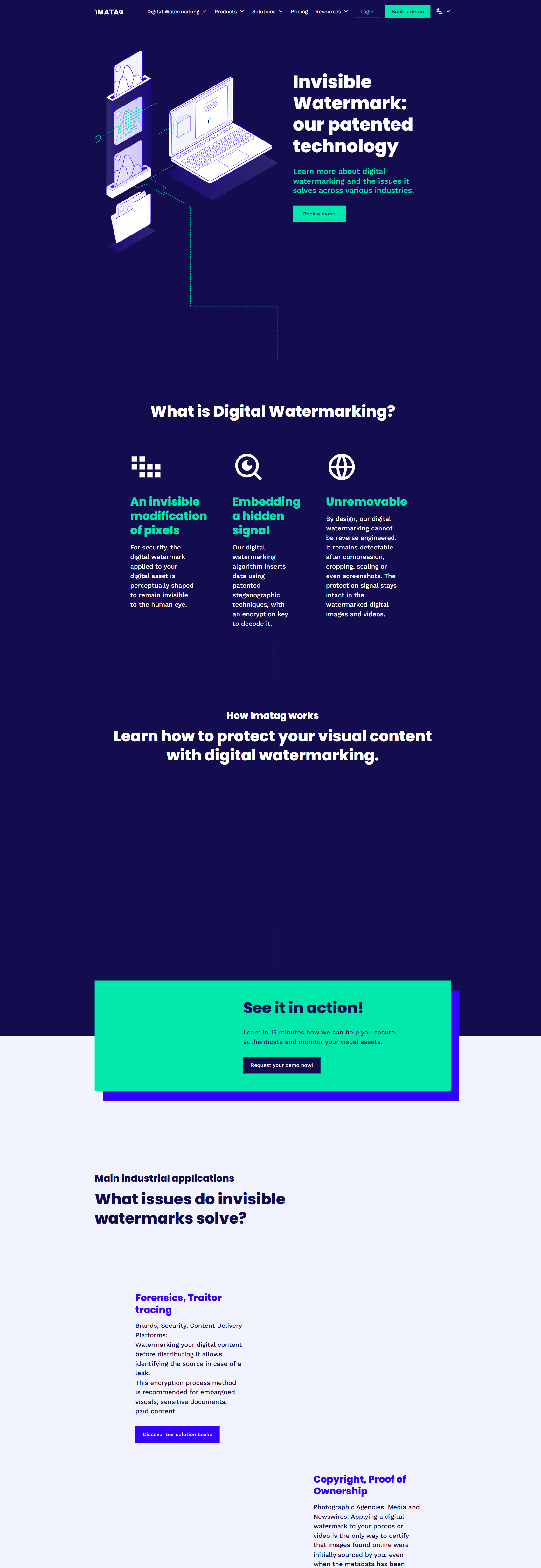
IMATAG combines invisible watermarking with online content monitoring to track where images appear across the web. It targets photographers, agencies, and brand protection teams rather than developers building AI pipelines. Like Steg.AI, it's sold as a managed service without a self-serve API tier.
Enterprise alternatives
Most enterprise watermarking tools require a sales call before you can even run a test embed. ForensicMark's free tier — 20 embeds and 30 detections per day, no account required — lets you validate the technology in your pipeline before any commercial conversation.
Try ForensicMark free - no signup
20 invisible watermark embeds per day, 30 detections per day. No account required. Upgrade to API access when you're ready to scale.